What Is a Disposable Email and When Should You Use One?
Let me paint you a quick picture
You're trying to read an article, download a single PDF, or test a new app. Then it happens — a pop-up asks for your email address. You hesitate. You know what comes next. Spam. Newsletters you didn't ask for. Maybe even your data sold to who-knows-who.
We've all been there more times than we'd like to admit.
That little moment of hesitation is exactly why temporary email exists. It's not complicated or technical. It's just a simple, practical solution to a very common problem.
In this article, I'll explain what temporary email actually is, how it works, and why more people are using it in 2025. Not because they're doing anything shady, but because they're tired of spam and want to keep their personal inbox clean.
So what is a temporary email, really?
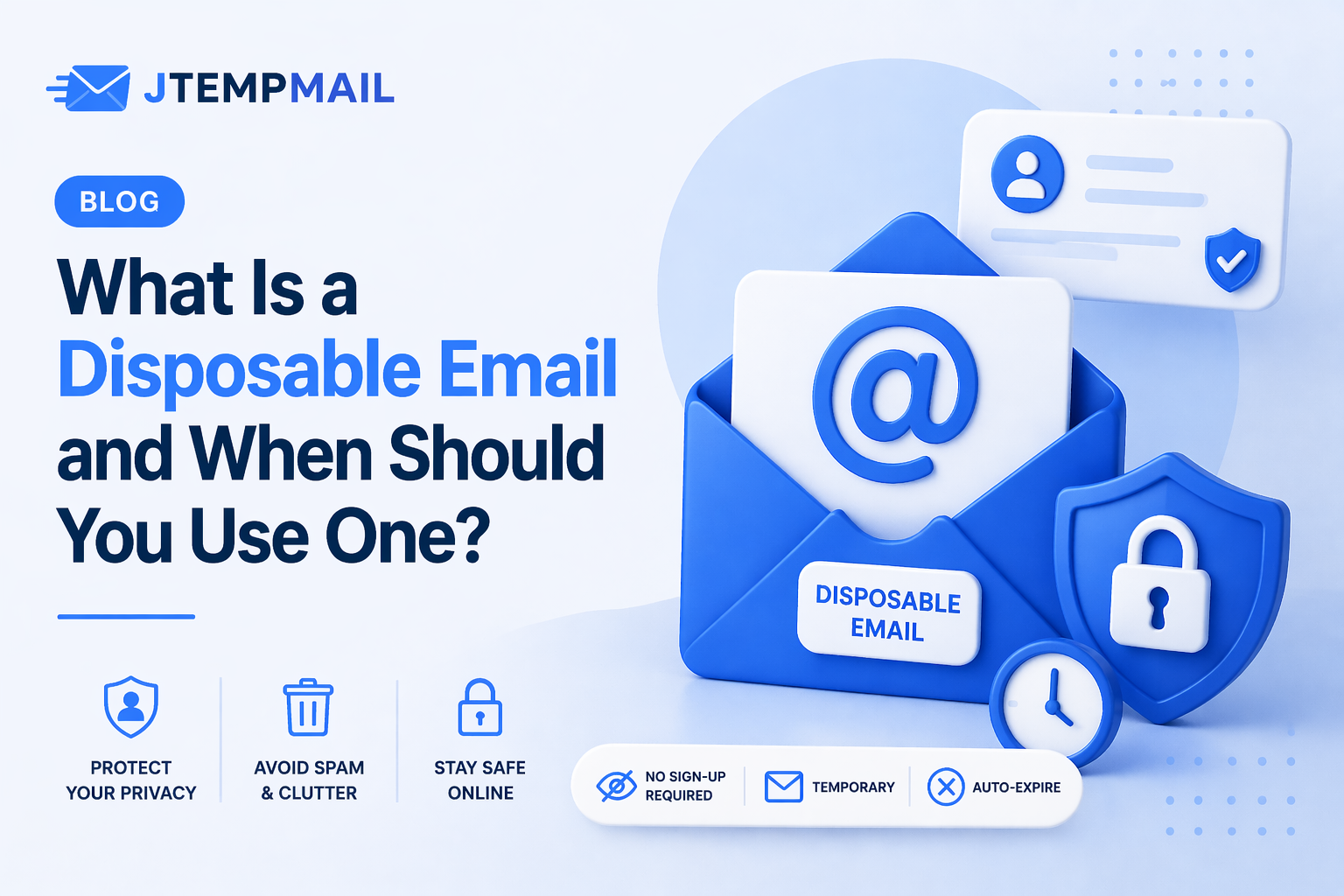
Think of it as a burner email address. It works just like your regular email, but with one big difference — it only exists for a short time. Usually 10 minutes to a few hours.
You use it to receive confirmation links, verification codes, or activation emails. Once you're done, the address disappears. No cleanup. No unsubscribe buttons. No spam showing up years later from some website you completely forgot about.
People call it different names: disposable email, trash mail, fake mail, 10-minute mail, or anonymous email. But they all mean the same thing — a short-lived email that protects your real one.
How does it actually work?
Honestly, it's much simpler than most people think.
You open a temporary email website — let's say jtempmail.com. The moment you arrive, you already have an email address ready to use. No forms to fill out. No passwords to create. No "sign up for free" buttons to click.
You copy that address, paste it into whatever website is asking for your email, and that's it. Any message they send goes straight to your temporary inbox. You can read it, click the verification link, or grab your download code.
When the time runs out? Everything disappears automatically. You don't have to do anything.
No registration. No tracking. No strings attached.
Why should you start using one in 2025?
Online privacy isn't what it used to be. Every signup, every "free" download, every newsletter subscription — it all adds up. Your email ends up on lists you never agreed to be on.
Here are the real reasons temporary email makes sense right now.
You keep your privacy
Every time you give out your real email, you're trusting that website to not lose it, sell it, or get hacked. That's a lot of trust. A disposable email removes that risk completely. They get an address. You get what you need. Nobody gets your real info.
No more spam in your main inbox
Once you start using temporary email for random signups, your real inbox becomes so much cleaner. No promotional emails. No "we miss you" reminders. No newsletters you accidentally subscribed to. Just the emails you actually want to receive.
You can test things safely
Maybe you're building a website. Maybe you just want to see if an app is worth your time before committing. Temporary emails let you try things without giving away your real address. If the service turns out to be spammy? Who cares — that email doesn't exist anymore.
It's completely anonymous
Sometimes you just need to access something quickly without leaving a trail. A temporary email lets you do that. No name required. No personal information. Just an address that works for a few minutes and then disappears.
No signup to use it
This is the part people love the most. You don't need to register, remember a password, or give anyone your name. Open the page. Copy the address. That's it.
When should you actually use a temporary email?
More often than you'd think. Here are some everyday examples:
Signing up for a forum you'll probably only visit once
Downloading an ebook or a free resource
Testing a new app or software trial
Buying something from a website you don't fully trust yet
Registering for a gaming or streaming platform
Accessing articles behind a "signup to read" wall
Pretty much any time a website asks for your email and you think "do I really want to give them this?" — that's when you use a temporary one.
A few questions people usually ask
How long does a temporary email last?
It depends on the service. Some last 10 minutes. Some last a few hours. In our case at jtempmail.com, each address lasts 10 minutes. That's usually plenty of time to receive a verification link or a download code.
Is it safe to use one?
For everyday things like signups and downloads? Yes, very safe. Just don't use a temporary email for your online banking or important password resets. Use it for what it's meant for — quick, anonymous, low-stakes situations.
Can I send emails from a temporary inbox?
Usually not. And that's on purpose. Most temporary email services are receive-only to prevent people from using them for spam or abuse.
What happens when it expires?
Everything gets deleted automatically. The emails, the address, everything. You don't have to lift a finger.
Do I need to register to use the service?
Not at all. That's the whole point. No accounts, no passwords, no personal information. Just visit the page and you're ready to go.
Let's wrap this up
Look, temporary email isn't some high-tech privacy tool for experts. It's just a smart, simple habit that keeps your real inbox clean and your personal information a little more private.
In 2025, with spam getting worse and data leaks happening all the time, it just makes sense to have a disposable email address ready when you need one.
If you care about your privacy — or even if you just hate spam — give it a try. Your inbox will thank you later.